
Beginner’s Guide: How to Start Figure Skating from Scratch
Dreaming of gliding across the ice with confidence? Figure skating isn’t just for professionals—it’s a sport anyone can enjoy at any age. Whether you want a fun hobby, a fitness activity, or even a competitive challenge, starting from scratch is absolutely possible. All you need is the right approach, a little patience, and the willingness to keep practicing.
Figure skating may look difficult, but anyone can start—even without prior experience. Whether you’re an adult or a child, the journey begins with simple steps and consistent practice. Here’s a step-by-step guide to help you get started.
Step 1. Decide How You Want to Learn
-
Join a skating school. Group lessons are fun and affordable, but the schedule is fixed.
-
Take private lessons. A coach can help you progress faster with a flexible, personalized approach.
-
Learn on your own. You can start practicing at a public rink—just begin with the basics while holding the barrier for support.
Step 2. Prepare Before You Step on the Ice
-
Practice balance at home with simple exercises, like squats on one leg.
-
Watch tutorial videos to get familiar with basic techniques.
-
Warm up before each session with light running, jumping, or stretching to avoid injuries.
Step 3. Get the Right Equipment
-
Skates. Start with rentals, but buy your own pair once you’re serious. Make sure they fit snugly, support the ankles, and aren’t too soft.
-
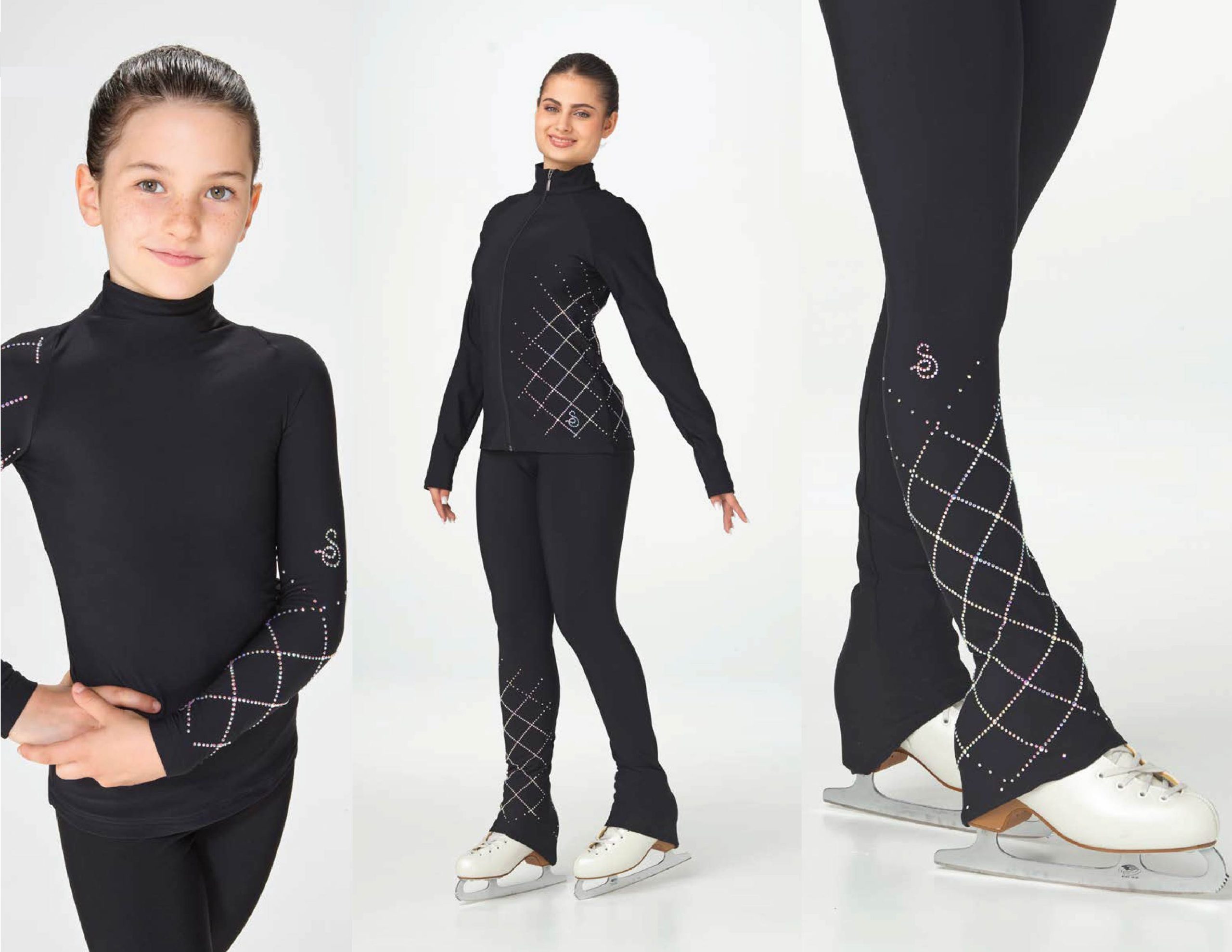
Clothing. Wear flexible, warm clothes such as a thermal suit, gloves, and a hat. Avoid anything too loose.
-
Protective gear. Beginners—especially kids—should wear knee pads, elbow pads, gloves, and a helmet.
-
Accessories. Use blade covers: hard ones for walking off the ice, soft ones for drying and storage.
Step 4. Master the Basics
-
Correct stance – knees slightly bent, body relaxed.
-
Gliding forward – push off gently and let the skates roll.
-
Gliding backward – small controlled pushes to move in reverse.
-
Stopping – practice snowplow and T-stops for safety.
-
Simple turns – start with a “snake” pattern to build confidence.
Step 5. Train Regularly
-
Start small—15 to 30 minutes on the ice is enough for beginners.
-
Practice 2–3 times per week for steady progress.
-
Build up gradually: balance on two feet, then try gliding on one.
-
Stay patient—progress takes time, but consistency always pays off.
Step 6. For Children
-
Best starting age. Kids can begin lessons as early as 3–4 years old, but up to 10 years is still a great age to start.
-
Choose the right school. Look for licensed programs with experienced coaches.
-
Focus on technique. Good habits from the start prevent mistakes later.
Figures and Moves in the Field
Figures
Figure-skating movements are performed on either the inside edge (closer to the inside of the foot) or the outside edge of the blade, while moving forward or backward.
-
Most movements originate from school figures, which are precise curves and turns forming two or three connected circles.
-
Figures vary in difficulty and are designed to develop:
-
Edge control
-
Balance
-
Turning skills on a single skate
-
-
Skaters in the U.S. historically had to complete nine tests to master figures, which included more than three dozen separate elements. Many figures required tracing with each foot.
-
Simplest figures: Outside and inside figure 8
-
Most difficult: Paragraph loop or paragraph double three (two complete circles on one foot)
-
Moves in the Field
After the elimination of school figures, the “moves in the field” tests were introduced to develop:
-
Balance and power
-
Stroking and extension
-
Edge skills
Progression includes:
-
Basic edges: Crossovers, spirals, 3-turns
-
Intermediate moves: Mohawks, cross rolls, edge pulls
Unlike school figures, moves in the field are performed across the full rink, rather than a small patch of ice.
-
In the U.S., the USFSA requires skaters to complete eight moves-in-the-field tests to reach the senior level.
Training and Injuries
Beginning Skaters
Most beginners, whether children or adults, start in classes that teach fundamental skills such as:
-
Falling safely and standing up
-
Forward and backward crossovers
As skills improve, skaters often turn to private coaches for more focused, individualized instruction.
Competitive Training
Modern competitive skaters devote more time to conditioning and weight training than athletes did in the 1970s and 1980s.
-
With figures no longer requiring up to four hours daily, skaters can focus on:
-
Freestyle skating
-
Off-ice training such as:
-
Weightlifting
-
Endurance conditioning
-
Stretching
-
Dance
-
-
-
A typical training day may include:
-
2–3 hours on the ice
-
2 hours of off-ice conditioning
-
This balanced approach builds strength, stamina, flexibility, and artistry, while reducing the risk of overuse injuries.
Proper training, both on and off the ice, is crucial for performance, injury prevention, and long-term athletic development in figure skating.
Injuries in Modern Figure Skating
The increased focus on athleticism and high-level jumps has also led to a rise in injuries.
-
Extended careers: Skaters are staying in the sport longer than in the past, which contributes to higher injury rates, particularly for male skaters in their late 20s.
-
Stressful jumps: Triple axels and quadruple jumps place enormous strain on the ankles, knees, and back.
-
Younger skaters: Children attempting triple jumps at earlier ages face higher injury risks.
Advances in medical care, sports medicine, and technology have helped skaters manage these risks. Early conditioning and strength training for young skaters aim to reduce injury rates while supporting safe progression through increasingly difficult skills.
While figure skating demands both artistry and athleticism, careful training and medical support are essential for longevity and injury prevention in the sport.
Amateur Figure Skating Competitions in the United States
The United States is home to one of the most competitive and detailed amateur figure skating systems in the world. Regional and national competitions are structured by the U.S. Figure Skating Association (USFSA), with skaters advancing through a series of levels by passing required tests.
Singles Skating Levels
Eligible singles skaters progress through the following levels:
-
Pre-preliminary
-
Preliminary
-
Pre-juvenile
-
Juvenile
-
Intermediate
-
Novice
-
Junior
-
Senior
To advance, skaters must pass both the moves in the field test and the freestyle test for their level.
-
At the juvenile level, skaters must perform a single Axel among other required elements.
-
At the senior level, skaters must complete four different double or triple jumps.
Pairs Skating Levels
Pairs follow a similar progression:
-
Preliminary
-
Juvenile
-
Intermediate
-
Novice
-
Junior
-
Senior
Senior pairs must demonstrate:
-
Two synchronized double jumps
-
A pair spin
-
A double throw jump
-
One double twist lift
Ice Dance Levels
Solo dance tests include the following levels:
-
Preliminary
-
Pre-bronze
-
Bronze
-
Pre-silver
-
Silver
-
Pre-gold
-
Gold
Senior international dancers must pass 13 dance tests and master 31 different dances, ranging from the simple Dutch Waltz to the complex Tango Romantica.
Synchronized Skating Levels
Teams are divided into these levels:
-
Preliminary
-
Juvenile
-
Intermediate
-
Novice
-
Junior
-
Senior
If the team earns passing marks on a test, the achievement is credited to every member of the team, including alternates.
This structured system allows skaters in the U.S. to develop their skills step by step, from beginner tests all the way to senior national and international competition.
In the United States, many competitions are held throughout the year for skaters of all levels. These competitions are sanctioned by the U.S. Figure Skating Association (USFSA), and both participants and their coaches must be members of the organization. The Ice Skating Institute (ISI) also organizes amateur competitions, but its focus is different: while the USFSA develops skaters aiming for Olympic or World Championship levels, ISI emphasizes the recreational side of skating, rewarding participation and enjoyment at every stage.
Competition Structure in the U.S.
For USFSA amateur competitions, the country is divided into three major sections:
-
Eastern
-
Midwestern
-
Pacific Coast
Each section is further divided into three regions, making a total of nine regions nationwide.
Regionals → Sectionals → Nationals
-
Regional Competitions
-
Held every fall across all nine regions.
-
The top four skaters in each discipline (men’s, women’s, pairs, and dance) advance to the next stage.
-
-
Sectional Competitions
-
Each sectional combines three regions into one larger event.
-
The top four skaters in the novice, junior, and senior levels from each sectional move on to nationals.
-
-
-
Features a minimum of 12 qualifying singles skaters in each category.
-
Additional skaters may qualify by receiving byes, either for medical reasons or due to strong performances at national-level events in the previous season.
-
This tiered qualification system allows skaters to steadily work their way up the competitive ladder—from local regionals to the national stage—ensuring that only the most consistent and skilled athletes reach the highest level.
Junior Nationals and Level Progression
Not all skaters follow the same path to nationals. The top four juvenile and intermediate skaters from each discipline at each regional competition advance directly to the U.S. Junior Nationals, rather than competing at sectionals or senior nationals.
A unique rule also applies at this stage:
-
Winners at all national competitions must move up to the next level the following season.
-
Senior-level winners, however, have the option to remain and defend their titles year after year.
Selection for the World and Olympic Teams
The U.S. Figure Skating Association selects the World Team during senior nationals. This team represents the United States at the World Championships and other major international events.
-
Typically, the top three senior skaters or teams in each discipline (men’s, women’s, pairs, dance) are chosen.
-
The exact number of competitors allowed depends on how the U.S. team performed at the previous year’s World Championships.
-
In Olympic years, the Olympic team is also selected at senior nationals, making the event especially high-stakes.
Figure Skating in Canada
In Canada, the governing body for the sport is Skate Canada, the official ISU member organization. Like the USFSA, it:
-
Qualifies judges
-
Provides financial support for skaters
-
Trains and certifies coaches
Skate Canada also organizes junior and senior nationals for its best athletes. The qualification process is structured in a way similar to the United States, giving Canadian skaters a clear pathway from the grassroots level to international competition.
Both the U.S. and Canada have carefully designed systems that help skaters grow step by step—from regional contests all the way to the World Championships and Olympic Games.
Figure Skating in Russia
The Russian Figure Skating Federation oversees the sport through a large network of more than 40 skating clubs, each of which holds its own championships. These clubs are grouped into regional divisions, and skaters must:
-
Earn a high number of competition points
-
Place well in their regional championships
Only then can they qualify for the Russian Nationals.
At nationals, the top skaters are evaluated by the federation for selection to the Russian junior and senior world teams.
In addition to athlete development, the federation also:
-
Runs training programs for judges and coaches
-
Establishes standards for 10 levels of advanced skaters
-
Requires junior and senior skaters to pass multiple tests before they can earn the prestigious title of “Master of the Sport.”
Figure Skating in Japan
The Japan Skating Federation plays a similar role in developing the sport. It:
-
Trains judges
-
Runs coaching programs
-
Oversees the development of eligible skaters
Japan is divided into six regions, and senior skaters (age 15+) must meet strict criteria to advance:
-
They must reach level seven on an eight-level testing scale.
-
They must place high enough in regional competition to qualify for Eastern or Western Sectionals.
At sectionals, about 30 skaters per discipline compete, with the top half advancing to the Japanese Nationals, where the world team is selected.
Japan also hosts separate national championships for younger skaters:
-
Novice A: ages 11–12
-
Novice B: ages 10 and under
-
Juniors: ages 13–18
✨ Together, Russia and Japan showcase how national federations develop talent with rigorous testing systems, layered competitions, and strong support structures for coaches, judges, and athletes.
Figure Skating in the United Kingdom
The National Ice Skating Association of Great Britain (NISA) has governed eligible skating in the U.K. since its founding in 1879. It oversees testing and competitions across multiple disciplines, including:
-
Figure skating
-
Ice dancing
-
Synchronized skating
-
Speed skating
-
Recreational skating
Pathway for Competitive Skaters
Aspiring Olympians in the U.K. must first complete the 10-stage Skate UK program before taking their first novice test in freestyle, dance, or other disciplines. From there, skaters may progress through:
-
Novice
-
Junior
-
Senior
Qualification for Nationals
To reach the British Nationals, NISA runs 10 qualifying events each season.
-
Singles skaters must compete in at least three events.
-
Dance and pairs teams must compete in at least two events.
-
At each qualifying event, the top 12 skaters earn points.
-
After the series concludes, the top 12 skaters in each discipline advance to the nationals at the primary, junior, and senior levels.
Figure Skating in Australia
The governing body in Australia is Ice Skating Australia (ISA), the country’s official ISU member federation.
Regional and National Pathway
Australia is divided into five skating regions, each holding its own regional championships.
-
The top four skaters or teams from each discipline advance to nationals.
-
At nationals, skaters are selected for the junior and senior world teams.
Development Programs
Ice Skating Australia also supports grassroots development with learn-to-skate programs across local rinks. Skaters progress through the following levels:
-
Preliminary
-
Elementary
-
Primary
-
Novice
-
Junior
-
Senior
Both the U.K. and Australia demonstrate how national federations balance athlete development programs with competitive pathways, ensuring skaters at every level—from beginners to Olympic hopefuls—have opportunities to grow.
International Competition: The World Championships
The World Figure Skating Championships (Worlds) are held every year and hosted by different ISU member countries. These championships determine not only the world’s top skaters but also how many entries each nation can send in the following year.
How Countries Qualify
-
The number of skaters a country can send in each discipline (men’s, women’s, pairs, dance) depends on their performance at the previous year’s Worlds.
-
If a country’s skaters’ final placements total 11 or less, the country may send three skaters in that discipline the next year.
-
Otherwise, the country can send one or two skaters.
-
Not all countries automatically qualify to send even one skater. Skaters who wish to qualify can compete in specific fall competitions, with the top six finishers earning a spot at Worlds.
Competition Format
Since 1999, the ISU has used a multi-phase scoring system for singles competitions:
-
First Phase – Long Program (Qualifying Round)
-
All skaters perform a long program.
-
The top 30 skaters advance to the short program.
-
This phase counts for 20% of the final score.
-
-
Second Phase – Short Program
-
Skaters compete in a short program.
-
The top 24 advance to the final round.
-
This phase counts for 30% of the final score.
-
-
Final Phase – Free Skate (Long Program)
-
The final 24 skaters perform another long program.
-
This phase counts for 50% of the final score.
-
Points and Team Entries
-
Each skater or team earns points in their discipline based on order of finish.
-
These points determine how many skaters a country can send to Worlds the following year, making every placement crucial for both individual and national rankings.
The World Championships are not only a stage for the world’s best skaters but also a system that rewards countries for consistent performance, creating high stakes at every level of competition.
Junior World Championships
The Junior World Championships are held annually for the top junior-level skaters—and some senior-level skaters—representing ISU member countries.
-
Eligibility:
-
Singles skaters: under 19 years old
-
Pairs and dance teams: under 21 years old
-
-
Participants must not have competed at the senior World Championships yet.
Junior Worlds provide an important stepping stone for young skaters aiming to transition to senior international competition.
Grand Prix and Junior Grand Prix
Since the early 1990s, the International Skating Union (ISU) has sponsored the Grand Prix and Junior Grand Prix series, showcasing the world’s top skaters.
Grand Prix Series
-
Events:
-
Skate America
-
Skate Canada
-
Sparkassen Cup on Ice
-
Trophée Lalique
-
Cup of Russia
-
NHK Trophy
-
-
Entry limits:
-
Singles: max 12 skaters per event
-
Pairs: max 10 teams per event
-
-
Seeding and invitations:
-
Skaters who placed in the top six at the previous Worlds are seeded
-
Other top-level skaters from ISU member countries are also invited
-
-
Participation rules:
-
Each skater must compete in at least two but no more than three events
-
Skaters earn points and prize money for each event
-
Grand Prix Final
-
The top six skaters/teams across all Grand Prix events advance to the Grand Prix Final
-
Prize money is awarded based on final placement
The Junior Worlds and Grand Prix series serve as crucial international platforms, helping skaters gain experience, earn points, and prepare for major competitions like the World Championships and the Olympics.
Other Major ISU Championships
Beyond the World Championships and Grand Prix series, the ISU organizes additional major events that allow skaters to compete at an international level and gain valuable experience.
European Championships
-
Open to skaters from European ISU member countries
-
Features senior-level skaters in men’s, women’s, pairs, and ice dance disciplines
-
Often serves as a preparatory event for Worlds or the Olympics
-
Skaters qualify through their national federations, which select top performers from domestic competitions
Four Continents Championships
-
Designed for skaters from non-European countries (Asia, Americas, Africa, and Oceania)
-
Includes senior-level men, women, pairs, and ice dance
-
Helps provide international competition experience for skaters outside Europe
-
Qualification is also handled by the respective national federations
World Team Trophy
-
A team-based international competition where countries send top skaters from all disciplines
-
Each team earns points based on placements, and the nation with the highest total points wins
-
Encourages skaters to contribute to team success as well as individual performance
Purpose of ISU Championships
-
Give skaters opportunities to gain international exposure
-
Provide ranking points that influence seedings for major events
-
Help federations evaluate skaters for world team selection and Olympic participation
Together with the World Championships, Junior Worlds, and Grand Prix series, these ISU events create a comprehensive competitive pathway, allowing skaters to progress from regional and national levels to the global stage.
Junior Grand Prix Series
The Junior Grand Prix (JGP) series is designed to give promising young skaters valuable international competition experience before they reach the senior world level.
-
Eligibility:
-
Singles skaters: under 19 years old
-
Pairs and ice dance: under 21 years old
-
-
Participation: Skaters are invited by their home countries. There are eight events in total, but each skater may only compete in two events.
-
Scoring and Prize Money: Points and prize money are awarded for each placement.
-
Final Event: The top eight skaters with the most points across all events advance to the Junior Grand Prix Final.
-
Transition to Senior Grand Prix: Skaters who compete in JGP events cannot enter the senior Grand Prix in the same discipline, unless they compete in a different discipline (e.g., a singles skater entering a senior pairs event).
European Championships
The European Championships have been held annually since 1891 and are open to skaters from all European countries.
-
Historical Note: In 1948, there were no geographic restrictions, and North American skaters Dick Button (USA) and Barbara Ann Scott (Canada) entered and won the singles competitions.
-
Olympic Years: The Olympic team for participating countries is selected after the European Championships.
Four Continents Championships
Established in 1999, the Four Continents Championships give skaters from non-European countries a major international competition.
-
Participating Regions: Asia, the Americas, Africa, and Oceania
-
Countries Included: Australia, Canada, China, Hong Kong/China, Japan, Kazakhstan, Mexico, Mongolia, New Zealand, North Korea, South Africa, South Korea, Taiwan, Thailand, the United States, and Uzbekistan
-
Olympic Qualification: The Olympic team for these countries is determined through national competitions, not the Four Continents event.
Together, the Junior Grand Prix, European Championships, and Four Continents Championships provide critical international experience, preparing skaters for Worlds, the Olympics, and senior Grand Prix events.
The Olympics
The Olympic Games, held every four years, are the most prestigious event in figure skating. Skaters from around the world compete for gold, silver, and bronze medals in men’s singles, women’s singles, pairs, and ice dance.
-
Age Requirement: Skaters must be at least 15 years old by July 1 of the previous year to be eligible.
-
Number of Entries per Country: Determined by each country’s performance at the previous year’s World Championships.
-
History:
-
Men’s, women’s, and pairs events have been part of the Olympics since 1908.
-
Ice dancing was added in 1976.
-
In 2011, a team event was introduced, first held at the 2014 Sochi Winter Games, combining individual men, women, pairs, and ice dance performances.
-
The Olympics remain the pinnacle of the sport, with the highest level of competition and global visibility.
Professional Ice Skating Competitions
Professional competitions operate differently from amateur or ISU events.
-
Invitation-Only: Most professional events invite skaters who have already achieved success at the senior national, world, or Olympic level.
-
Eligibility: Participants typically have passed senior-level tests and often have medals from major competitions.
-
High Profile: Organizers favor well-known skaters to attract television audiences, although a few lesser-known skaters have succeeded based on post-eligible career growth.
Professional competitions allow skaters to continue performing at a high level, showcasing artistry and technical skill while engaging a broad audience.
From the Olympics to professional shows, figure skating offers opportunities for athletes to shine long after their amateur careers, highlighting both competitive excellence and entertainment value.
Professional Skating Programs
At professional competitions, skaters usually perform two programs:
-
Technical Program
-
Includes triple jumps, footwork sequences, and spins
-
Focuses on technical difficulty and execution
-
-
Artistic Program
-
Fewer triple jumps than in eligible skating
-
Emphasizes presentation, style, and interpretation
-
Team Competitions
Some professional events are team-oriented:
-
Four skaters from one country or group compete against four from another
-
Scores from all technical and artistic programs are combined
-
The team with the highest total score wins
Judges and Scoring in Professional Skating
Professional competitions differ significantly from eligible skating:
-
Judges:
-
Usually international coaches or former skaters
-
ISU judges lose eligibility if they judge unsanctioned professional events
-
-
Scoring:
-
Eligible skating uses separate marks for technical merit and presentation
-
Professional skating uses single marks for each program, ranging from 1 to 10
-
The ordinal system is not used; placements are determined solely by total points
-
Professional competitions showcase skaters’ artistry and technical mastery in a format that emphasizes entertainment and style, while providing a unique team or individual competitive experience beyond the eligible ranks.
Ice Shows
Ice shows are professional skating spectacles that combine the athleticism of skating with the drama and spectacle of theater. They feature:
-
Large casts of skaters
-
Elaborate costumes and lighting
-
Special musical scores and choreography
-
Storytelling through performance, often based on fairy tales, films, classical stories, or romances
History of Ice Shows
-
One of the earliest ice shows was staged in 1915 at the Hippodrome in New York City.
-
Featured German ice ballerina Charlotte Oelschlagel and an ice ballet imported from Berlin
-
The show, Flirting in St. Moritz, ran for 300 days and inspired The Frozen Warning (1916), the first motion picture centered on skating
-
-
Ice Follies:
-
First produced in 1936 by Oscar Johnson, Edward Shipstad, and Roy Shipstad
-
Over 30 years, it entertained more than 60 million people
-
-
Other prominent U.S. shows included the Hollywood Ice Review and the Sonja Henie Ice Revue
-
Holiday on Ice:
-
Used mobile rinks with portable refrigeration for indoor and outdoor performances
-
-
In Northern Europe—especially Great Britain, Russia, and the Scandinavian countries—elaborate pantomimes on ice became a popular tradition
Ice shows allow skaters to combine technical skill with artistic expression, entertaining audiences worldwide while pushing the boundaries of theatrical skating.
Ice Shows: Modern Legends
Ice Capades
The Ice Capades, which opened in 1940, dominated the ice-show scene for decades. At its peak:
-
Millions of fans attended annually
-
Skaters performed in three separate companies: East, West, and Continental
-
Famous stars included:
-
Peggy Fleming
-
Dick Button
-
Dorothy Hamill
-
Janet Lynn
-
Charlie Tickner
-
Scott Hamilton
-
Kitty and Peter Carruthers
-
Jayne Torvill and Christopher Dean
-
Dorothy Hamill headlined in the late 1970s and later owned the Ice Capades in the 1990s.
Ice Capades shows were famous for:
-
Elaborate Rockettes-style production numbers
-
Gaudy props and colorful costumes
-
Comedy sketches and animated pop-culture characters
Other shows, like Holiday on Ice and Ice Follies, staged similar variety productions. By the 1990s, large-scale production numbers became less popular, giving way to more contemporary formats.
Disney on Ice
-
Began in 1981
-
Features top-level skaters as headliners
-
Highlights Disney’s animated movie characters brought to life on ice
Stars on Ice
Founded in 1986 by Scott Hamilton and sports agent Robert D. Kain, Stars on Ice focuses on:
-
A small international cast of elite skaters, often Olympic and world champions
-
Sophisticated choreography, including triple jumps in both individual and group performances
-
New themes, individual routines, and original production numbers each year
These shows highlight how professional skating evolved from grand variety spectacles to thematically rich performances that combine athleticism, artistry, and storytelling on ice.
Champions on Ice
Champions on Ice, formerly known as the Tour of World and Olympic Champions, was founded and continues to be run by Tom Collins, a member of the World Figure Skating Hall of Fame.
-
Now in its fourth decade, the tour features:
-
Recent world medalists and Olympic hopefuls from around the globe
-
Veteran American and international stars, such as Olympic champions Brian Boitano and Oksana Baiul
-
-
Performances include:
-
Individual exhibition programs
-
Elaborate opening and closing group production numbers
-
Proscenium and Theatrical Ice Shows
In the late 1970s and 1980s, skaters like John Curry, Toller Cranston, and Robin Cousins pushed the creative boundaries of figure-skating entertainment:
-
Many shows were staged in theaters, combining technical skating with theatrical storytelling
-
Robin Cousins became known for producing Broadway-style musical ice shows in England, including productions like Cinderella and Beauty and the Beast
Innovative Productions
-
Dance legends Torvill and Dean created imaginative performances on standard ice rinks, using spectacular lighting, choreography, and props
-
Feld Entertainment, the producer of Disney on Ice, adapted popular stories such as The Wizard of Oz, Starlight Express, and Anastasia for the ice in the 1990s
-
Producer Willy Bietak teamed with choreographer Sarah Kawahara to create the U.S. theatrical tour Broadway on Ice
These tours and theatrical productions demonstrate how professional figure skating evolved into a sophisticated form of on-ice storytelling, blending elite athletic skill with artistic innovation.
Leave a Reply